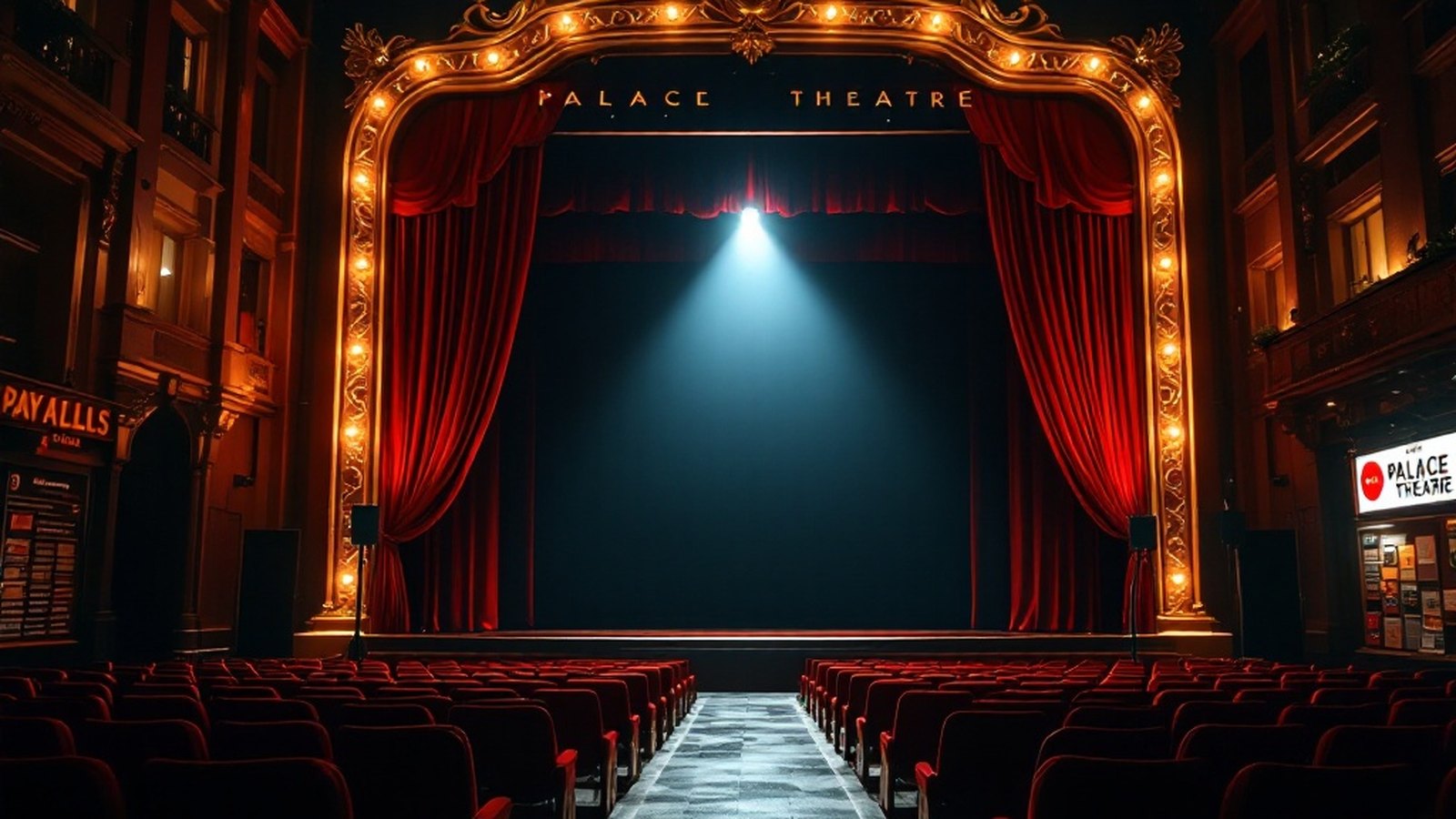
Two houses, one district — and what distinguishes each
New York City holds the country's densest concentration of live theatre. The Broadway cluster alone packs more than forty professional houses into the Theater District in Midtown Manhattan, each with a minimum of five hundred seats, each with its own personality. If you're orienting yourself before you go, two venues tell you most of what you need to know about how this world is structured.
So did Bette Midler and Jerry Lewis.
Broadway: The Commercial Center
The Theater District is centered on Times Square in Midtown, forming the commercial hub of English-language theatre worldwide. Broadway's houses are large — the Palace tops 1,700 seats — and productions here move at the scale of real-estate ventures: star casting, investor backing, press campaigns, and transfer deals. Performers build full careers on these boards, appearing on screen only in supporting roles when they surface at all. The talent pool flows both ways: when a cast turns over, producers recruit from screen work as well as from within the Broadway world, and a long run can define an actor's public identity as thoroughly as any film.
The Palace Theatre: Vaudeville's Cathedral
Opened in 1913, the Palace Theatre was for decades the premier vaudeville house in the country. A booking here wasn't merely prestigious — it was considered the pinnacle of a performer's career, the stage every working act in New York dreamed of reaching. Judy Garland played it. So did Bette Midler and Jerry Lewis. In 1965, fifty-two years after it opened, the Nederlander Organization converted it to a legitimate theatre. The Palace went on to host Applause with Lauren Bacall and The Will Rogers Follies with Keith Carradine. At more than 1,700 seats, it remains one of the largest houses on Broadway — a room that still carries the weight of its own mythology.
The Majestic Theatre: Shubert's Flagship
Built by the Chanin Brothers and acquired by the Shubert Organization in 1930, the Majestic Theatre pairs a Palladian exterior with the Adam-style interiors characteristic of Shubert houses: delicate ornament, classical proportion, a sense of occasion before the curtain rises. Its notably generous balcony offers clean sightlines to the stage — a practical advantage in a large house, where upper seating can feel punishingly remote. That combination of scale and sight-quality has kept the Majestic among Broadway's most sought-after bookings across every decade it has operated.
These two venues don't represent Broadway's full range — they represent its poles. The Palace is history made architecture. The Majestic is the commercial flagship at its most functional and elegant. Together they sketch the logic of the district: big rooms, long memories, and the persistent conviction that theatre at this scale still matters.
A short chronology
- 1913Palace Theatre opens as premier vaudeville house
- 1930Shubert Organization acquires the Majestic Theatre
- 1965Nederlander Organization converts the Palace to legitimate theatre