Every season, a handful of Broadway productions absorb most of the ink and nearly all of the tourist dollars. But the companies doing the essential work — developing new plays, sustaining living writers, taking risks on voices that commercial producers won't touch — are mostly Off-Broadway and below, running on thin margins and deep conviction.
The nonprofit institutions carry the heaviest load. The Roundabout Theatre Company operates across multiple houses, from the American Airlines Theatre on 42nd Street to the intimate Laura Pels, mixing classic revivals with new work and maintaining one of the sector's most active education programs. The Manhattan Theatre Club — anchored at the Samuel J. Friedman Theatre and Studio 54 — has been a primary launchpad for new American plays for decades, premiering writers who go on to define the canon. Both organizations hold Broadway-level ambitions inside nonprofit structures, which means they can absorb the losses that a commercial producer cannot.
Further downtown, the model shifts. The Vineyard Theatre — compact, fiercely independent — has a track record that embarrasses houses ten times its size. Avenue Q, The Scottsboro Boys, How I Learned to Drive: serious work that found enormous audiences because someone was willing to take the first bet. New York City Center keeps the musical form honest through its Encores! series, staging rarely revived scores with minimal production values and maximum attention to the material itself. These aren't vanity projects; they're acts of archival courage.
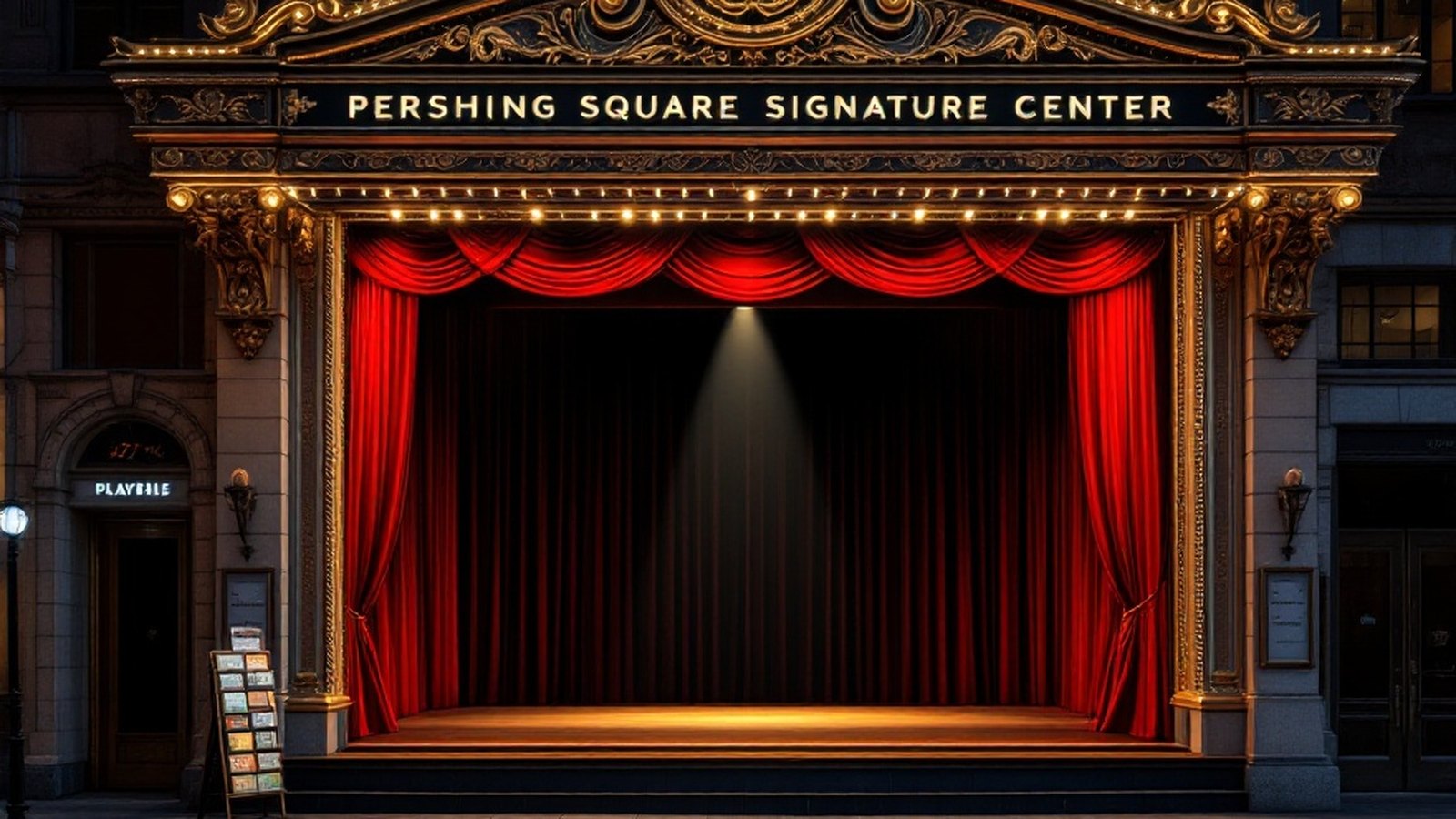
The Pershing Square Signature Center on 42nd Street is purpose-built around the playwright — each season's residency commits years, not just a production slot, to a single writer's work. James Houghton founded the Signature Theatre Company on that principle, and the building the company eventually moved into makes the argument in concrete and glass: the writer is the institution. It's a model worth examining closely.
Brooklyn's presence has grown into something that can no longer be treated as a footnote. Companies rooted in Downtown Brooklyn and across the boroughs are generating premieres and developing artists in ways that reflect the city's actual demographics more honestly than most Manhattan houses manage.
What all these organizations share is a belief that the work comes before the return — that a company's job is to make the room where a play can exist, and then get out of its way. Commercial theater needs a hit. These companies need a season, and occasionally the two overlap in ways that benefit everyone.
The infrastructure isn't glamorous. It's grants and galas and the endless arithmetic of earned versus contributed revenue. But without it, the New York stage is just real estate.
The nonprofit institutions carry the heaviest load.