Start with the season, not the list
New York theatre does not stop. There is no single opening date, no unified calendar, no moment when someone fires a gun and the season begins. Broadway houses book year-round; the Off-Broadway nonprofits — Roundabout Theatre Company, Manhattan Theatre Club, the Vineyard Theatre, the Signature's Pershing Square home — run overlapping seasons that rarely align neatly. The scrappier Off-Off-Broadway rooms at Danspace Project, downtown black boxes, church basements, and borrowed lofts operate whenever a company can afford to mount something. The practical upshot: there is always something worth seeing, and the question is never "is anything on?" but "what do I actually want, and what can I actually spend?"
Start by knowing the difference between Broadway and everything else — not as a value judgment but as a purchasing decision. Broadway houses seat roughly 500 to 1,900 people and charge accordingly; even with discounts, you are rarely below forty dollars for an honest seat. Off-Broadway venues cap at 499 seats, and their ticket prices often reflect that intimacy — both in cost and in what the work feels like from Row C of a black box. If you have never seen a play in a room with 99 other people, prioritize that before you prioritize a view of a Broadway marquee.
Getting in without paying full price Full price is optional.

Getting in without paying full price
Full price is optional. That is the first thing to understand about New York ticketing, and the industry relies on most people not knowing it.
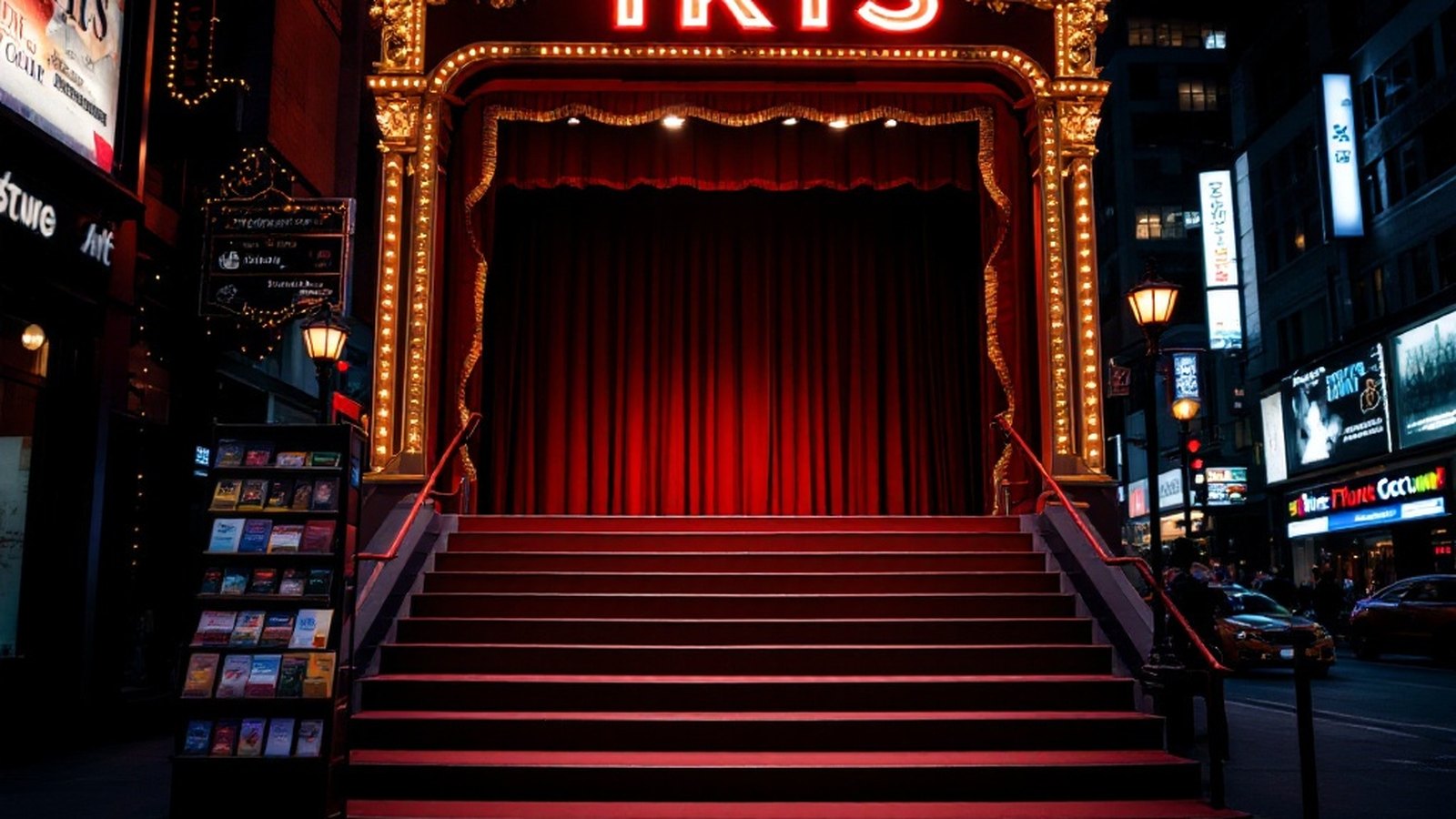
TKTS is the most visible option — the red-staired booth in the heart of Times Square, plus a downtown location at South Street Seaport. Same-day tickets at 20–50% off, cash or card, no membership required. The selection varies: you will not always find the hottest show of the moment, but the booth regularly carries strong Broadway and some Off-Broadway titles. Check the Theatre Development Fund's app before you join the line so you know what's available.
Rush tickets are released at box office opening on the day of the performance — often as few as a handful of front-row seats at a sharp discount. Rules vary by production; some houses post their rush policies on their websites, others keep it informal. Arrive early, be prepared to wait, and know that some shows now run digital rushes through TodayTix rather than requiring you to stand on a sidewalk.
Lotteries are the digital-era solution to demand. Hamilton famously ran one; many heavily booked shows follow suit. Apps like TodayTix and Broadway Box aggregate a good number of them in one place. Enter the day before, find out that morning, pay somewhere around thirty dollars if you win. The odds feel grim until the morning you win.
Memberships at nonprofit theatres are the underutilized long game. Roundabout, MTC, the Vineyard, the Signature — each offers subscriber packages that bring per-ticket costs down substantially, sometimes to under thirty dollars for Off-Broadway work, and often include priority booking before productions sell out. If you see more than three or four shows a year at a single company, a membership almost always pencils out.
Promo codes circulate through Broadway Box, Goldstar, and the email lists of individual productions. Sign up for a show's mailing list the week it opens. Codes often appear during slow booking periods — midweek, mid-run — and can carve 30–40% off face value without any of the uncertainty of rush or lottery.
Finding the work worth your time
Listings alone won't save you. Every app and aggregator will show you everything playing; none of them will tell you which production of anything is actually alive right now, which cast is doing career-defining work, which playwright is saying something that matters. For that you need criticism, and in New York, criticism is abundant if you know where to look.
Read the reviews — not to outsource your taste, but to calibrate your choices. The New York Times covers Broadway thoroughly and Off-Broadway selectively. Smaller independent outlets cover the downtown scene more densely. Notice which critics write with the kind of specificity that suggests they actually watched the show rather than the preview screener of their own assumptions. A good theatre review tells you what the production is doing and whether it's doing it; that is the information you need.
Talk to people who actually go. The New York theatre community is not a closed guild — it is a working scene full of audience members, artists, and front-of-house staff who see things constantly and have opinions. Ask them what surprised them this month. The word-of-mouth circuit in this city moves faster and more honestly than any algorithmic recommendation.
Finally: take the risk on the thing you don't recognize. The unknown play at a company you've never heard of, the solo show in a black box on the outer edge of your subway line — these are where the New York stage most consistently does what no other medium can. The tools exist to get you in the door cheaply. What you do with the seat is up to you.